Featured
Table of Contents
In the ever-evolving landscape of business software application, mid-size business face unmatched obstacles driven by AI disturbance, extreme competition, slowing growth, and moving financier demands. These companies are captured in a "big capture"pressured on one side by nimble, AI-native entrants that can replicate applications at a fraction of the expense and on the other side by tech behemoths, such as Microsoft, Salesforce, and Oracle, that are putting billions into the AI arms race.
The future lies in their capability to adjust their operations and service models at speed, or danger being interrupted by more agile competitors. Across the business software application market, top-line development has slowed substantially. Our analysis of 122 openly listed business software companies below $10B in earnings shows that the percentage of high-growth companies reduced from 57% in 2023 to 39% in 2024.
While AI-native players have attracted significant current investment (more than $100B in 2024 alone) and development rates remain high, we think this represents just a small portion of the wider enterprise software application market. Furthermore, business consumers are facing their own expense pressures, resulting in lower expansion rates and higher consumer churn.
As customer demand for tailored services continues to rise, the business software industry has seen a surge in smaller sized, more nimble players using specialized services, frequently at a lower cost and made it possible for by AI (e.g., Freshdesk from Freshworks, Zoho One from Zoho Corporation, and Agent OS from Sierra). Tech behemoths are driving debt consolidation through acquisitions, establishing platforms and aggressively pursuing cross-selling chances.
With competition building from both sides, numerous mid-size business software application companies are forced to reassess their strategy and business model. AI-driven services have actually started to make a considerable effect in enterprise software. While the most fully grown applications today remain in AI-driven coding and customer assistance (e.g. GitHub's Copilot for coding and Zendesk's Response Bot for consumer support), we are approaching a tipping point where AI will considerably enhance effectiveness across other crucial company functions too.
How B2B Automation Accelerates Success
As a result, practically two thirds of the software company executives in our study are concentrated on utilizing AI as a development chauffeur. On the other hand, AI agents are set to disrupt the logic and presentation layer of SaaS applications. Practical examples are currently appearing, such as Klarna's well-publicized decision to end its relationships with both Salesforce and Workday in favor of a suite of in-house industrialized AI apps and smaller sized agile suppliers.
This shift could eliminate the requirement for numerous enterprise software companies that grew in the standard SaaS architecture. As growth continues to slow across both public and private markets, financiers are putting a higher focus on profitability. Higher rates of interest are partly to blame, raising return on investment (ROI) targets.
In action, we have seen a considerable pivot within the mid-sized software companies toward active expense controls and selective capital release. We think the focus on effectiveness will magnify in this unsure macroeconomic environment. Business software application executives face an uphill struggle of choosing when and how to concentrate on running vs.
Automation vs. Legacy Processes: What Succeeds?
In these disruptive times, we think the very best leaders need to do both, discovering a course towards predictable growth while driving functional rigor to open funds to invest in AI. Developing GenAI services and AI representatives needs considerable R&D financial investment in addition to a fundamentally new product method. This transition goes beyond merely launching new productsit needs an extensive business model improvement across prices, sales, marketing, operations, and income recognition.
The Competitive Edge of Modern Search TechAdditionally, raised compute costs for AI agents might drive a higher expense of profits compared to standard SaaS offerings, forcing business to reconsider their expense management methods. Over the past decade, enterprise software application growth has actually been focused around brand-new consumer acquisition driven by expanding product portfolios and sales groups. In the current environment, consumer acquisition is significantly tough and expensive.
This should be strengthened by a well-defined product portfolio method, value-additive AI usage cases, and innovative pricing models. By enhancing spend across operations, business software business can open the capital to invest in high-impact innovations (such as building AI representatives) or conventional growth efforts (such as strategic partnerships). This procedure involves streamlining item portfolios, cutting financial investments in low-growth items, and using AI and other automation techniques to enhance front- and back-office functions.
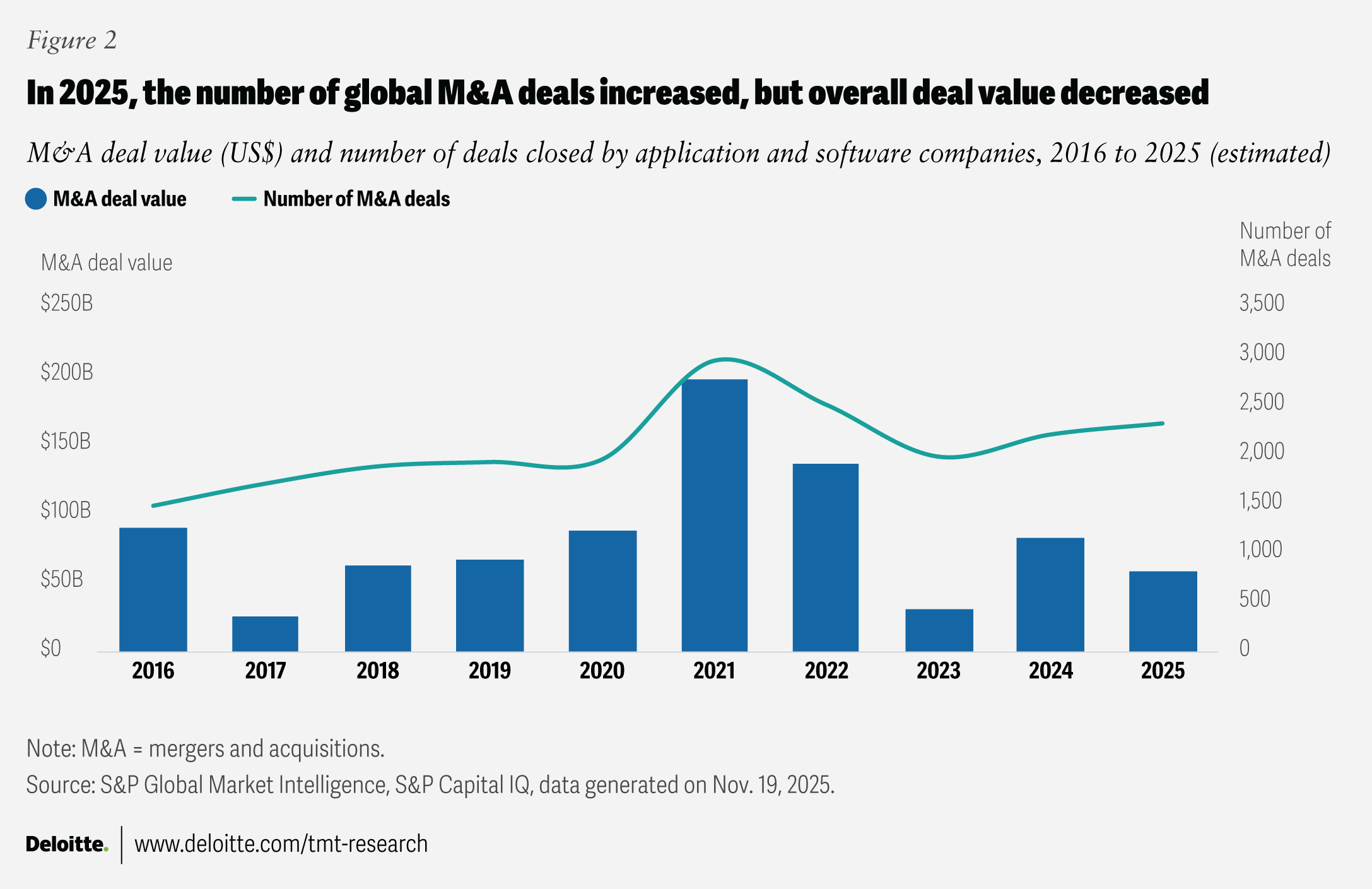
Numerous business software companies are pursuing acquisitions or placing themselves to be obtained by bigger players or financiers. These methods permit such business to take advantage of the resources and scale of larger competitors, ensuring they remain competitive in a developing market. This trend is echoed by the 2025 AlixPartners Disturbance Index study, where growth and profitability leaders state they are two times as most likely to execute a deal in 2025 versus 2024.
Effective Sales Enablement Strategies for Win Bigger Deals
The North America business software market held a market share of over 41% in 2024. The U.S. enterprise software market is growing significantly at a CAGR of 11.6% from 2025 to 2030.
Based on end-use, the IT & Telecom segment represented the biggest market share of over 20% in 2024. 2024 Market Size: USD 263.79 Billion 2030 Projected Market Size: USD 517.26 Billion CAGR (2025-2030): 12.1% North America: Biggest market in 2024 As more organizations seek streamlined, reputable software application to minimize reliance on personnels, automate routine tasks, and decrease manual errors, the demand for business software options continues to rise.
In response, market gamers are acknowledging the growing requirement for innovative business resource planning (ERP), consumer relationship management (CRM), and information analytics software application, placing themselves to fulfill this need with innovative offerings. Enterprise software is widely used across various markets and sectors, including BFSI, health care, retail, production, government, and education.

As an outcome, there is a growing demand for advanced software solutions amongst companies. In addition, the growing shift towards hybrid work designs, accelerated by the COVID-19 pandemic, has actually substantially improved the adoption of enterprise software in markets such as healthcare, education, and retail.
Optimizing B2B Systems with Automation
This broadening usage of enterprise software across markets underscores its vital role in optimizing operations and boosting performance in the progressing digital landscape. Data safety and privacy are crucial motorists in the market, as organizations significantly prioritize the security of delicate info and compliance with strict regulations. With increasing issues over data breaches and cyberattacks, organizations throughout various sectors are turning to business software application services that offer robust security features, including encryption, multi-factor authentication, and advanced monitoring tools.
This concentrate on information privacy has opened brand-new opportunities for suppliers using specialized software application that incorporates strong security procedures while maintaining functional performance. The growing pattern of hybrid workplace has even more stressed the importance of safe and secure, remote access, making data protection an essential consider the continued growth of the market.

Latest Posts
Key Decisions for Choosing the Next CMS
Leveraging Advanced AI to Scale Editorial Production
Driving User Retention Via Advanced Interface Styles